

Recipes
Quick and easy bread dough
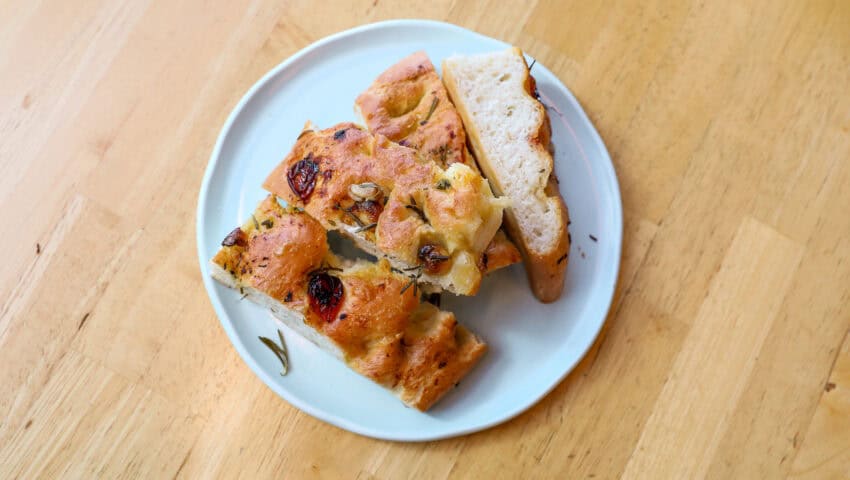
Sometimes the best recipes are the ones that work hardest.
Chef’s easy bread dough is a brilliant base recipe to have up your sleeve, particularly when you’re working in a busy catering environment or are pressed for time at home. From starting the dough to freshly baked bread, you can have something ready to eat in around three hours.
And it doesn’t have to become a loaf. The same dough can be used for pizzas, focaccia, cinnamon buns, cheese and Marmite swirls, tomato and chilli rolls and plenty more. Change the shape, fillings and toppings and you’ve got something completely different without starting again.
Good bread starts with good flour. We recommend using the best flour you can afford. We use Wildfarmed flour, giving this simple recipe a great foundation.
Quick, easy and incredibly versatile.
Ingredients
-
1 kg Wildfarmed strong bread flour (or another good-quality flour)
-
20 g fine sea salt
-
20 g fresh yeast, or approximately 10 g dried yeast
-
600 g lukewarm water
-
50 g olive oil
Method
1. Activate the yeast
Take around 50 g of the lukewarm water from the total quantity and mix it with the yeast. Leave somewhere warm for around 5 minutes. It should begin to bubble, which tells you the yeast is active and ready to use.
2. Make the dough
Add the remaining water and olive oil to the bowl of a stand mixer first. Daryll recommends adding the liquids before the flour to help prevent flour from becoming stuck at the bottom of the bowl.
Add the salt, followed by the Wildfarmed bread flour and activated yeast. Try not to put the salt directly onto the yeast.
3. Knead
Using a dough hook, mix on speed two for around 8 minutes, then check the dough. Continue mixing as required. Daryll mixes his for around 12 minutes in total.
You’re looking for an elastic dough that stretches very thinly without immediately tearing. When stretched, you should almost be able to see through it.
4. First prove
Cover the bowl and leave the dough somewhere warm for approximately 1 hour, or until it has roughly doubled in size.
Dampen your hands before handling the dough to help prevent it from sticking, then gently knock it back to remove the excess air.
5. Rest and shape
If the dough keeps springing back while you’re trying to shape or roll it, leave it to rest for around 10 minutes. When you come back, the dough should be more relaxed and easier to work with.
Now shape it depending on what you’re making. Use it as a base for:
-
Focaccia
-
Pizza
-
Cinnamon buns
-
Cheese and Marmite swirls
-
Tomato and chilli rolls
-
Bread rolls
-
Or simply a good loaf of bread
6. Prove again
Leave your shaped dough to prove until it has almost doubled in size.
A gentle press with your finger should slowly spring back. Daryll describes it as being a little like a balloon that’s a couple of days old: it still springs back, just not quite as quickly.
7. Bake
Bake at 180°C for approximately 25 minutes, adjusting the cooking time depending on the size and shape of the bread you’ve made.
Steam can give the bread an extra boost as it rises. In a professional oven, Daryll uses 50% steam. At home, you can place a small ovenproof dish of water at the bottom of the oven while it heats.
One dough, plenty of possibilities
The real brilliance of this recipe is its versatility. One quick dough gives our chefs a base for lots of different breads, making it particularly useful in a busy catering kitchen where simplicity, speed and flexibility matter.
Start with focaccia in the morning, turn the next batch into pizza, or take it in a sweeter direction with cinnamon buns. Once you know the base recipe, you can make it your own.
More mouthwatering recipes
Sticky toffee pudding with date toffee sauce and vanilla custard
A British classic. Soft, moist date sponge drenched in rich toffee sauce and served with homemade vanilla custard. Inspired by
Sticky toffee pudding sauce
Rich and buttery, this classic sticky toffee pudding sauce comes together in just five minutes with only three ingredients. Perfect

Smashed English muffins with sausage, hash browns and brown sauce
A toasted English muffin is filled with a juicy sausage patty, melted Red Leicester, a crispy hash brown, fried egg
Crispy hash browns
Crispy, salty and golden on the outside, with a soft, fluffy centre. These layered hash browns take a little preparation,