

Blogs
Grounds to Grapes: An afternoon exploring the future of sustainable coffee and wine
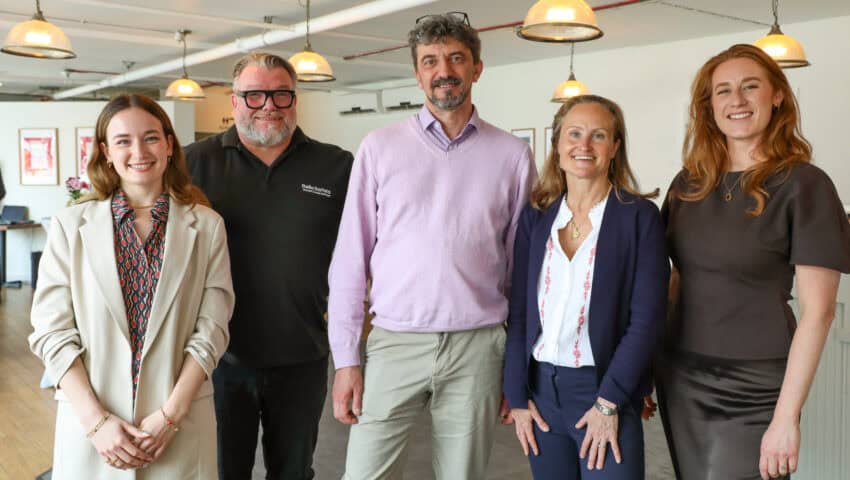
Throughout the past year and a half, our ESG Roundtables have explored a wide range of topics, from responsible sourcing to neurodiversity in the workplace. For our latest session, we turned our attention to another important part of our business: beverages.
Grounds to Grapes brought together industry experts, suppliers and colleagues to explore how climate change is shaping the future of coffee and wine production, and what we as consumers can do to help mitigate and adapt to these changes.
Held at Nova, our social impact coffee and bakery in Farringdon, the afternoon opened with an introduction from Angus Brydon, who reflected on the important role coffee and wine play within hospitality. Angus also highlighted the opportunities these categories create for learning and development, from our recent Barista Championship, where the winner will visit one of our coffee producers in Colombia, to the educational wine trips awarded to our highest-scoring WSET team members.
Coffee, consumption and regeneration
Following an introduction to the day’s agenda, Graziano Moroni, Head of Coffee, took to the stage to interview Marcel Binley from Bella Barista, supplier of our Perkee Santo Organic coffee. The discussion opened with a thought-provoking challenge: can the planet sustain the continued growth of global coffee consumption?
Graz explained that this question first struck him in 2012, when he began considering the impact of coffee becoming embedded in consumer habits across emerging markets, particularly in East Asia. With global demand continuing to rise, the industry faces an important challenge: how do we expand coffee production responsibly while protecting the natural resources it depends upon?
For Marcel, the turning point came during a visit to his coffee producer in Santos, Brazil, where he witnessed the impact that pesticide use, particularly glyphosate, was having on soil health and biodiversity. The experience inspired him to become a strong advocate for organic agriculture and, in 2019, Santo coffee achieved Regenerative Organic Certification.
Today, Bella Barista is working towards becoming the first coffee roaster certified in regenerative agriculture, with the ambition of moving towards 100% organic, regenerative and RegenAg coffee. While regenerative practices can affect yields, they support healthier ecosystems, improve long-term crop resilience and allow farmers to earn a premium for their produce.
The discussion also highlighted the value of direct relationships throughout the supply chain. Marcel’s long-standing partnership with Henrique, the producer behind Santo Organic, allows us to support regenerative farming practices that are helping restore and expand sustainable coffee production across Brazil.
Climate change and the future of wine
The conversation then turned to wine, where climate change is already influencing production in different ways. Joined by Katy Rickards from Ellis Wines, attendees heard how rising global temperatures and increased sunlight are contributing to sweeter grapes and, in turn, higher alcohol levels in wine, now often reaching 13.5–15% ABV. While this may sound positive on the surface, the reality is more complex, with wines becoming richer and fruitier but sometimes less balanced, showing lower acidity and reduced complexity.
Current projections suggest that if global temperatures rise by two degrees, up to 70% of wine-producing regions could be affected. The challenges vary by location, from extreme heat in Australia to wetter summers, spring frosts and stronger winds across Northern Europe.
Wine producers are already adapting. Alongside earlier harvests, they are:
-
Introducing heat- and drought-resistant grape varieties
-
Moving vineyards to cooler, higher-altitude sites
-
Exploring alternative yeasts to manage alcohol levels
-
Investing in soil health and biodiversity to build resilience
In regions such as Bordeaux, where regulations have historically been strict, producers are now embracing new approaches to safeguard future production, reflecting a broader shift toward long-term sustainability that supports both the land and the communities behind it.
Small choices can make a big difference
While the challenges facing coffee and wine production were a key focus of the afternoon, the discussion also highlighted practical solutions.
As Marie Phalippou, Head of Wine, and Katy explained, a significant proportion of wine’s environmental impact comes from transportation and packaging rather than production itself. Suppliers are already introducing innovations such as flexitanks, which can transport the equivalent of 32,000 bottles of wine and significantly reduce emissions.
Consumers can also play a role. Buying locally produced wine where possible helps reduce transport emissions, while choosing lighter bottles, rather than the traditional 500g glass, or opting for organic wines can make a meaningful difference.
Looking ahead
As the afternoon drew to a close, one message stood out clearly: the future of the beverages we enjoy is closely connected to the future of the ecosystems that sustain them.
Grounds to Grapes demonstrated that sustainability is not simply a topic for discussion. From regenerative coffee farming to lighter wine bottles, from responsible sourcing to more mindful consumption, there are tangible actions already being taken across the supply chain.
By supporting these efforts, we can help ensure that the products we enjoy today continue to thrive for generations to come.
More stories from our blog
How winning the BM Barista Championship took Calvin to Brazil
Planting his own coffee tree on a farm in Brazil wasn’t something Calvin ever thought he’d get the chance to
5 Food trends shaping workplace dining this Autumn
October brings a familiar wave of pumpkin spice and crumbles, but this year, the trends shaping food and beverage go
Meet the Directors: welcoming new team members to BM
Starting a new job is exciting, but it can also feel a little daunting. That is why every new BM

Whole foods, UPFs and the missing nuance
Recent discussions on social media have put ultra-processed foods (UPFs) firmly in the spotlight, with many linking them to a